
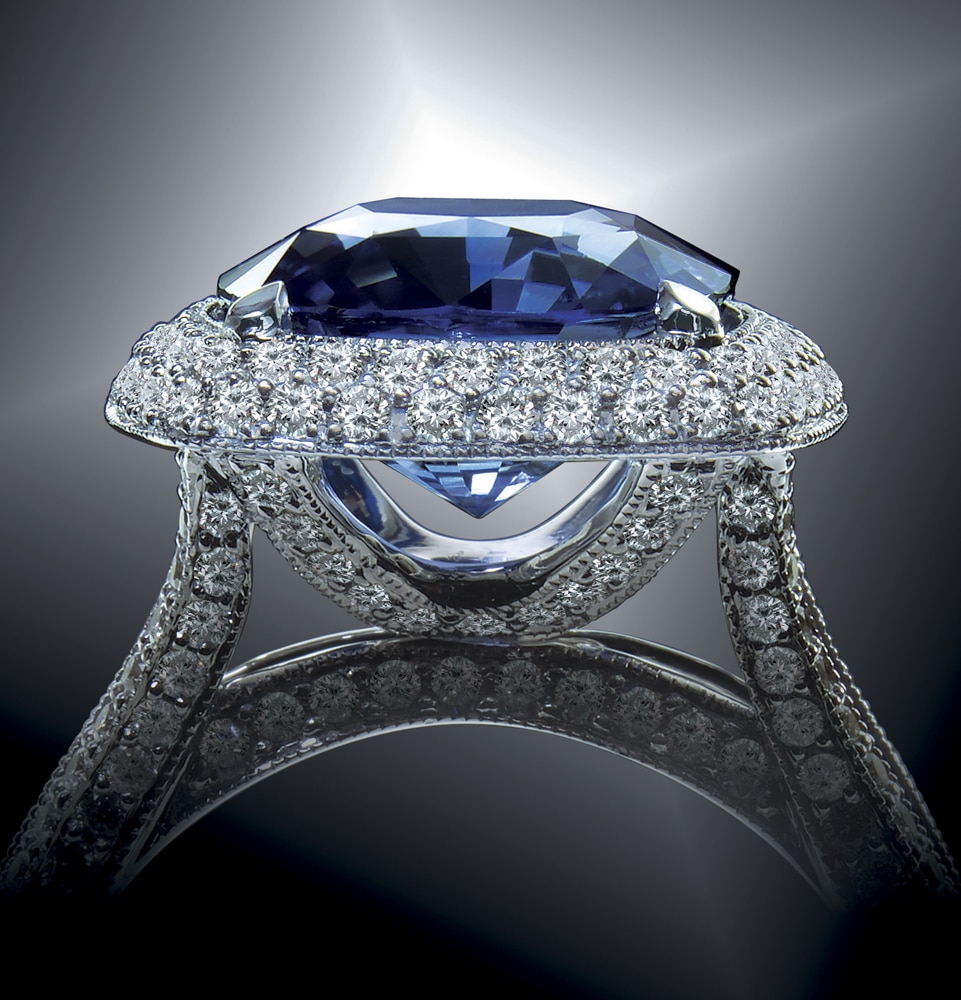
September's Birthstone: A Complete Guide to Sapphire
A stone that holds up under daily wear – in rings especially – earns a different kind of loyalty than one reserved for special occasions. Sapphire has been in regular use for centuries, and not just for its color. Its physical properties made it practical long before its symbolism made it famous.
At Copeland Jewelers, sapphire is the center stone in most of our staff’s own wedding rings. That is not something we planned as a talking point. It reflects how the stone actually performs over time.
Key Takeaways
- Sapphire ranks 9 on the Mohs scale, making it one of the most durable colored gemstones available for everyday wear.
- Blue is the most popular color, but sapphire occurs in nearly every hue except red – red corundum is classified as ruby.
- The most prized blue sapphires come from Kashmir, Myanmar, and Sri Lanka, each with distinct visual characteristics.
- Cornflower and velvety violet-blue tones are considered the benchmark for fine quality.
- Most commercial sapphires are heat-treated; untreated stones with strong color command a significant price premium.
- Sapphire is the traditional gift for 5th and 45th wedding anniversaries, in addition to its role as September’s birthstone.
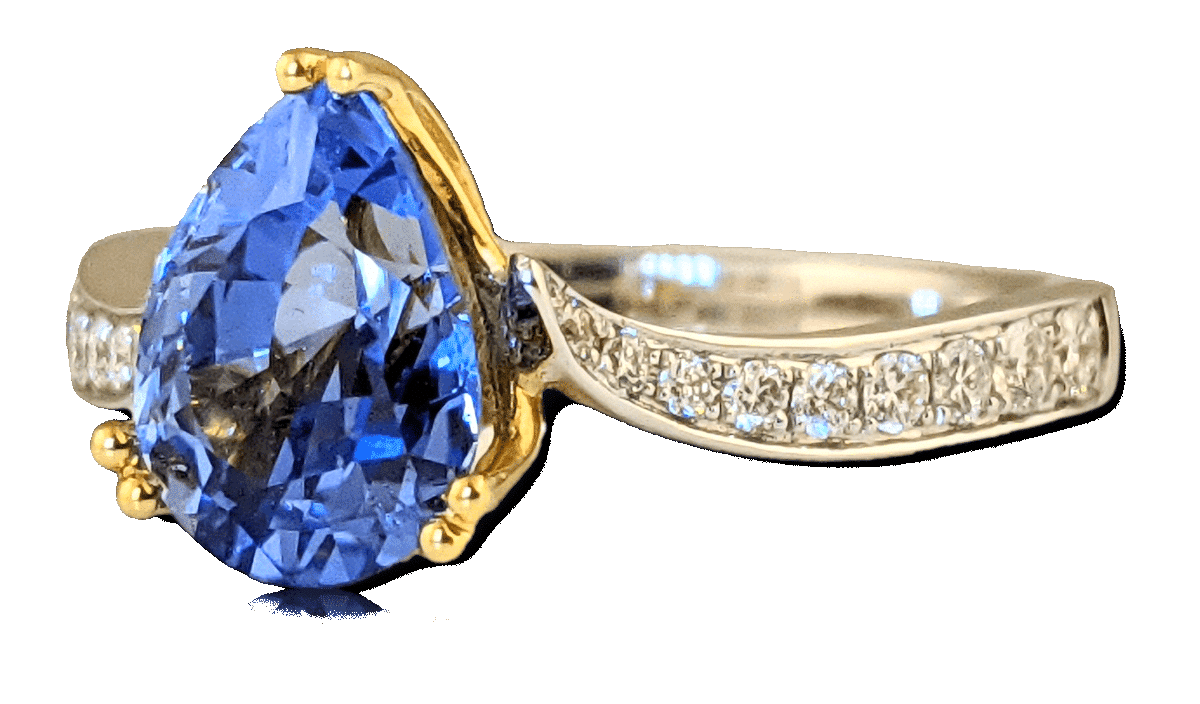
What Is Sapphire?
Sapphire is the gem variety of corundum, a mineral composed of aluminum oxide. Ruby is the only other corundum gem – and only because red corundum earned its own name. Every other color of gem-quality corundum is classified as sapphire.
When you are comparing ruby and sapphire in a jewelry setting, you are looking at the same mineral structure with different trace elements producing different colors.
Both rank 9 on the hardness scale. Both have the same toughness and wear resistance.
The difference is purely a matter of chromium concentration – which produces red – versus iron and titanium, which produce blue.
The Gemological Institute of America’s sapphire overview covers the optical and chemical properties in more detail for anyone who wants a technical foundation.
The Color Range
Sapphire’s color spectrum is broader than most people expect the first time they see it laid out.
Blue sapphire is the baseline reference. Shades run from pale icy blues through medium sky tones into deep midnight colors. The most commercially significant range falls in medium to medium-dark tones with strong saturation.
Fancy sapphires cover everything else:
- Oranges and yellows, from soft peach and lemon to vivid tangerine
- Pinks, lavenders, violets, and purples
- Greens
- Colorless or white – pure corundum with no trace elements, relatively rare
- Black
One category stands apart: padparadscha sapphire.
These stones occupy a narrow color zone described as pinkish-orange to orangey-pink, often compared to a sunset or a ripe lotus blossom. They carry the highest per-carat value among all fancy sapphires, and the definition of what qualifies is actively debated among gemologists.
The color window is narrow, and stones that fall just outside it – too pink, too orange, or too pale – do not command padparadscha pricing.
Blue Sapphire Quality
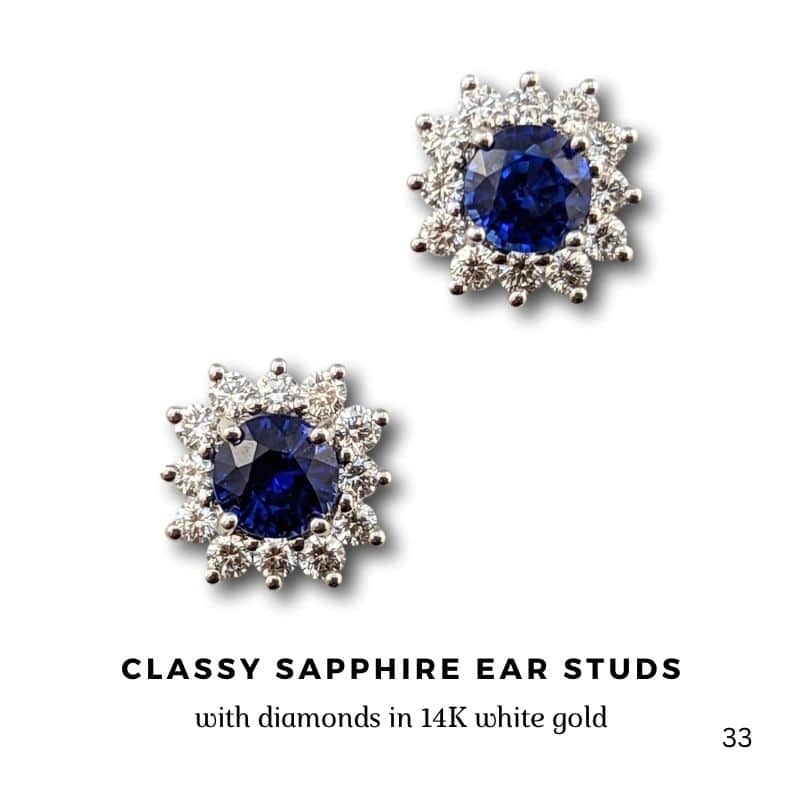
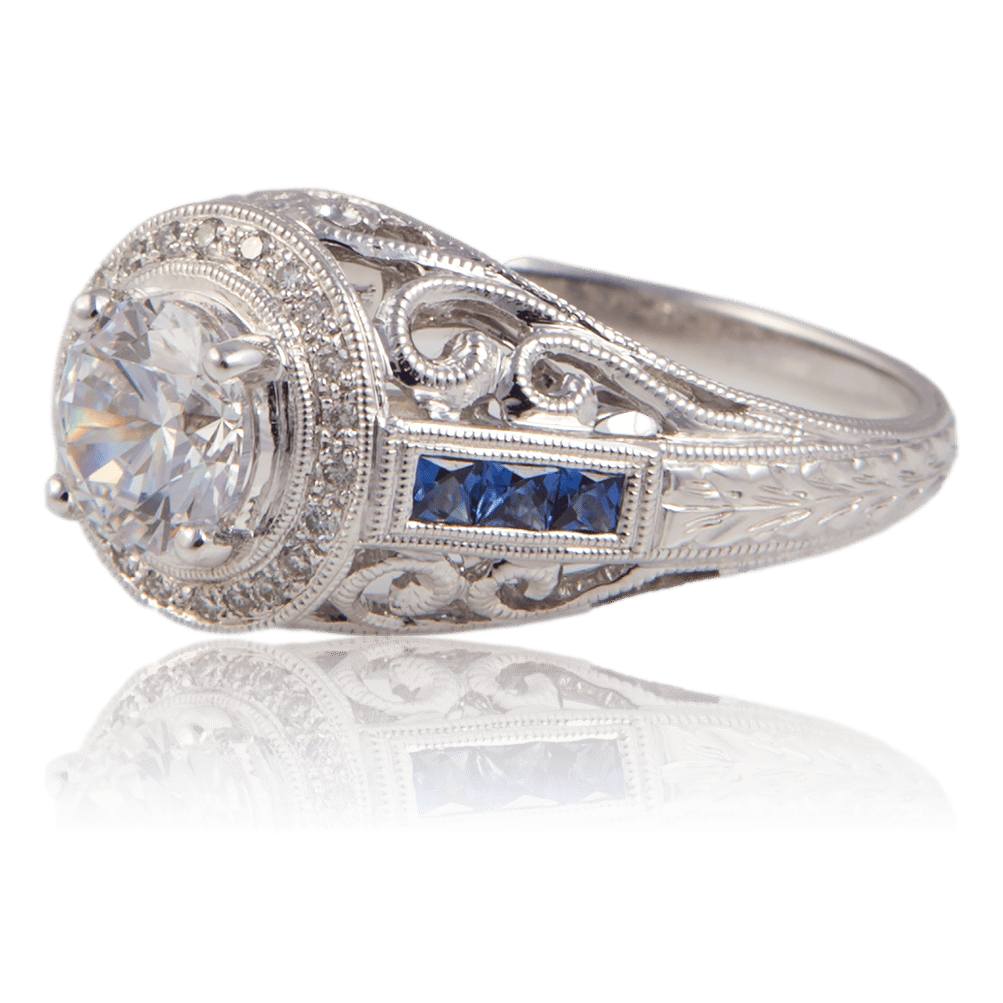
Within blue sapphire, two color descriptions come up consistently in fine jewelry discussions: cornflower blue and velvety blue.
Cornflower blue refers to a medium, slightly violet-blue with strong saturation and brightness. The tone is vivid without being dark, and the stone reads as lively rather than dense.
Velvety blue describes a quality associated specifically with Kashmir sapphires. The stones have a slightly diffused quality – microscopic inclusions scatter light internally, which creates a soft, luminous appearance rather than a sharp, glassy one. This is one of the few cases in gemology where inclusions add rather than subtract from a stone’s perceived quality and value.
The general standard: strong saturation across the entire stone, a blue that reads as deeply rich without losing brightness. Stones that are too dark appear flat under indoor lighting. Stones that run too pale lose the impact that makes sapphire worth selecting over a lighter-toned alternative.
Where Fine Sapphires Come From
Origin influences character – the geology of each source region produces recognizable results.
Kashmir, India
The Kashmir region produced what are still considered the benchmark specimens for fine blue sapphire. Mining has been largely inactive for over a century, which makes genuine Kashmir sapphires with documentation rare.
The defining characteristic is that velvety, internally glowing appearance caused by tiny inclusions. A certified Kashmir origin adds substantial value on its own, independent of visual quality.
Myanmar (Burma)
Before Kashmir sapphires were discovered in the 1880s, Burma was the established source for fine sapphire. Burmese stones tend toward a slightly more vivid, less diffused blue – still highly valued, and significantly more available than Kashmir material.
Sri Lanka
Sri Lanka produces a wide range of sapphire in many colors. Blue material from Sri Lanka tends toward lighter, airier tones. The country is also a major source of padparadscha sapphires and other fancy colors.
Montana, United States
Yogo Gulch in Montana produces a distinctive sapphire notable for two reasons: the color is a consistent, vivid blue without the greenish secondary hues common in many commercial stones, and the material is almost always untreated.
Yogo sapphires rarely develop the fine needle-like rutile inclusions found in stones from other regions, which contributes to their naturally cleaner clarity.
The mines have seen limited activity in recent years, which adds to their scarcity.
Additional Sources
- Thailand
- Australia
- Cambodia
- Madagascar
- Tanzania
Each contributes meaningfully to the commercial market, with characteristics that experienced gemologists can often identify through optical examination.
Heat Treatment and What It Means for Buyers
The majority of sapphires reaching the commercial market have been heat-treated.
This is widely accepted in the industry, standard practice rather than misrepresentation, and the GIA’s explanation of heat treatment in ruby and sapphire provides the technical background clearly.
Heat treatment improves both color and clarity. Applying high temperatures dissolves rutile needles, which clears cloudiness. It also intensifies or shifts color depending on conditions – lightening some stones and deepening others.
What heat treatment does not do is create a substitute for a genuinely fine untreated stone. Sapphires with strong color, good clarity, and no treatment history are uncommon. When a lab can certify a stone as unheated, that status meaningfully increases its value.
Yogo Gulch material from Montana is one of the better-known sources where untreated stones appear consistently. Kashmir sapphires, when they surface, are frequently tested for treatment and documented accordingly.
For anyone purchasing a sapphire as an investment piece or a significant anniversary gift, treatment history should be part of the conversation. A reputable jeweler will be able to provide this information or help arrange independent lab certification.
Treatment and Rarity
One of spinel’s strongest selling points for buyers who care about treatment history is that natural spinel is almost entirely untreated.
Unlike ruby and sapphire, which routinely undergo heat treatment to improve color and clarity, spinel generally reaches the market in its natural state. The color doesn’t need adjustment because the crystal already produces clean, vivid tones without intervention.
This is uncommon. Most colored gemstones in commercial circulation have been heated, oiled, or otherwise enhanced.
When a jeweler can confirm that a stone is untreated, that adds both value and transparency to the transaction – and with spinel, that confirmation is far easier to give than it is with most other gems.
Phenomenal Sapphires: Star Effects and Color Change
Two categories of sapphire involve optical phenomena beyond color.
Star sapphires display asterism – a star-shaped light reflection that appears to float across the surface when viewed under a single light source.
The effect is caused by intersecting needle-like rutile inclusions oriented within the crystal structure. In most cases, the star has six rays; twelve-rayed stars occur rarely and carry premium pricing.
Star sapphires are cut as cabochons rather than faceted, since the rounded dome shape is necessary to center the star. Evaluating a star sapphire involves both the quality of the base color and the sharpness and centering of the star itself.
Color-change sapphires shift between blue and violet-purple depending on the light source – daylight versus incandescent. In rarer cases, the shift runs from green to reddish-brown. The mechanism is similar to alexandrite, though the two minerals are entirely different.
Stones that show only a subtle shift or that change to brownish tones rather than true violet are less valued.

Sapphire Symbolism and Historical Use
Sapphire’s blue has consistently been associated with sky, water, and the divine across different cultures and time periods.
- Medieval clergy wore blue sapphire to represent heaven.
- In ancient Persia, tradition held that the earth rested on an enormous sapphire, and its reflection made the sky appear blue.
- Sanskrit texts ranked sapphire among the most prized of stones.
In modern history, the stone most responsible for resetting public awareness of sapphire engagement rings was the 18-carat blue sapphire ring that Prince William used to propose to Catherine Middleton in 2010. The ring had belonged to Princess Diana. The attention it received made blue sapphire center stones a visible trend again, though sapphire had never actually left the wedding jewelry conversation.
Sapphire is the traditional gemstone for both the 5th and 45th wedding anniversaries, and it remains the most popular colored stone choice for engagement rings overall.
Historically, sapphire has been associated with:
- Fidelity and sincerity
- Nobility and authority
- Clarity of thought and focus
- Protection and truth
These associations are cultural rather than scientific, but they give the stone a weight of meaning that contributes to its appeal in anniversary and milestone pieces.
How Sapphires Are Valued
Color is the primary driver of sapphire value, but each factor below interacts with the others.
Color
Saturation, hue, and tone all matter. Medium to medium-dark blue with strong saturation and minimal secondary hues commands the highest prices. Cornflower and velvety violet-blue are the benchmarks.
For fancy sapphires, padparadscha carries a distinct premium; all other fancy colors are assessed on saturation and purity of hue.
Origin
Kashmir, Burmese, and certified Sri Lankan material typically earns an origin premium when documentation exists. Origin certification from a recognized lab such as the GIA or Gübelin adds verifiable value.
Treatment
Untreated stones with strong color are uncommon and priced accordingly. Heat-treated stones are commercially standard and not considered a flaw when properly disclosed.
Clarity
Sapphire is expected to have inclusions – unlike diamonds, eye-clean sapphires are unusual rather than standard. Inclusions that don’t interrupt the stone’s color display or compromise its durability are acceptable. Kashmir sapphires are a specific exception where inclusions enhance rather than reduce value.
Cut
A well-proportioned cut distributes color evenly and avoids dark areas or “windows” where the stone goes pale in the center. Cut affects how the stone appears in different lighting conditions.
Carat weight
Sapphires of strong quality become significantly rarer in larger sizes. A two-carat sapphire with excellent color is not simply double the price of a one-carat stone with the same quality.
Caring for Sapphire Jewelry
Sapphire’s hardness makes it one of the more forgiving gemstones for daily wear, but its setting and any accompanying stones still require attention.
- Clean sapphire jewelry with warm water, mild soap, and a soft brush. This handles everyday buildup without risk.
- Ultrasonic cleaning is generally safe for untreated sapphires. Treated stones should be verified before using ultrasonic methods, since some treatments can be affected by vibration or heat.
- Avoid steam cleaning if the sapphire’s treatment history is unknown.
- Store sapphire separately from diamonds, which can scratch nearly any other stone. A fabric-lined compartment or individual pouch works well.
- Inspect settings periodically, especially for rings worn daily. Prongs loosen gradually. Catching a worn prong before it becomes a stone-loss risk is straightforward with routine prong inspection.
Our jewelry care guide covers maintenance practices for sapphire alongside other stone types for anyone who wants a complete reference.
Conclusion
For a single mineral, sapphire covers a remarkable amount of ground. It is corundum in every color but red, hard enough to outlast generations of wear, and shaped by where it forms into stones as different as a velvety Kashmir blue and a padparadscha’s pink-orange glow.
What ties September’s birthstone together is not one defining trait but the range of them, which is why two sapphires can share a name and still have almost nothing in common visually.
Understanding that range is what makes the stone worth a closer look, whether it marks a birthday, an anniversary, or simply a curiosity about one of the oldest gems in continuous use.