
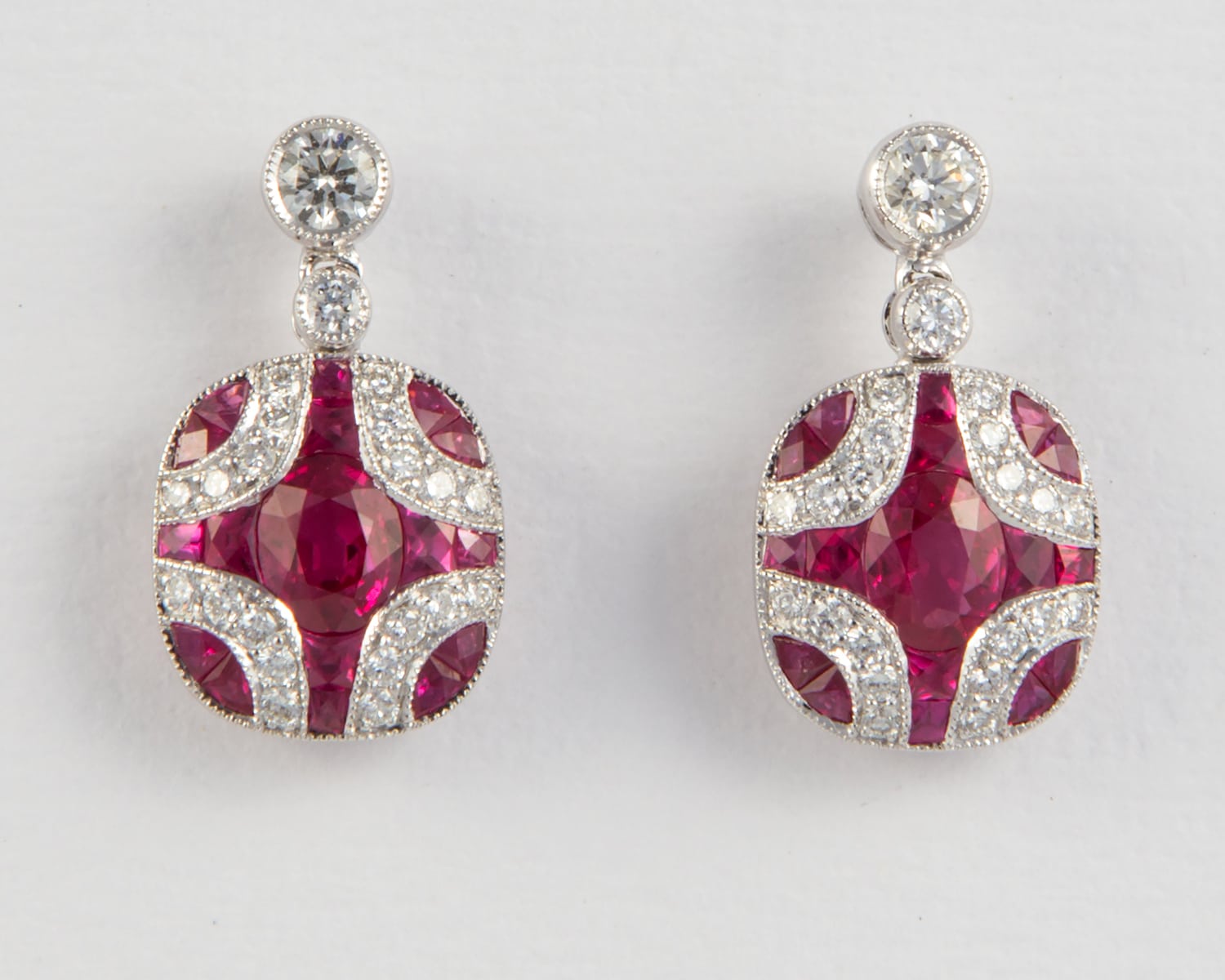
Ruby: July’s Birthstone of Fire, Strength, and Enduring Value
Long before modern gemology, this vivid red stone was associated with vitality, authority, and protection.
Its color suggested life itself, and cultures across Asia, Europe, and the Middle East treated fine ruby as a treasure equal to, and sometimes exceeding, diamond.
As the birthstone for July and the traditional gift for 15th and 40th wedding anniversaries, ruby continues to represent commitment, intensity, and permanence.
At Copeland Jewelers, ruby is one of the most requested colored gemstones for custom jewelry design, heirloom redesigns, and milestone pieces because it combines symbolism with real-world durability.

What Is a Ruby?
Ruby is the red variety of corundum, the same mineral family as sapphire.
The distinction is precise. While sapphires occur in nearly every hue, only red corundum qualifies as ruby. All other colors are classified as sapphire.
That red comes from trace amounts of chromium. As chromium concentration increases, saturation deepens.
Chromium can also cause fluorescence, which gives fine rubies an internal glow that becomes especially noticeable in natural daylight.
On the Mohs hardness scale, ruby ranks a 9. This places it just below diamond and makes it one of the most durable gemstones used in fine jewelry, particularly well-suited for rings worn daily.
Ruby Color and Quality
Ruby quality is assessed through a combination of color, clarity, cut, and origin, though not all factors carry equal weight.
Color dominates every valuation discussion. The most desirable rubies show a strong, balanced red without brown or overly dark tones. Stones often described as pigeon blood display a vivid red with a subtle bluish undertone and visible fluorescence.
Clarity is evaluated differently than with diamonds. Most natural rubies contain inclusions, and this is expected. Inclusions become a concern only when they interrupt light return or weaken the stone.
Cut determines how color and light interact. A thoughtful cut distributes color evenly and avoids dark areas that can flatten the appearance. Even a richly colored ruby can appear muted if cut poorly.
Where the Finest Rubies Come From
Historically, the most celebrated rubies came from Myanmar, formerly Burma. Many of these stones formed in marble with low iron content, which allows chromium-driven fluorescence to show more strongly. The result is intense color with a distinctive inner glow.
Other important sources include Sri Lanka, Thailand, Mozambique, and Madagascar. Each region produces rubies with recognizable characteristics, from lighter reds to deeper, more opaque tones.
Today, origin is considered alongside visual performance rather than prestige alone.
For readers who want a deeper understanding of ruby formation, identification, and sourcing standards, the Gemological Institute of America’s ruby overview provides clear, technical context.
Ruby in History and Lore
Ruby appears repeatedly in ancient texts and royal collections.
In Sanskrit writings, ruby was called ratnaraj, meaning king of gemstones. Biblical references associate ruby with wisdom, beauty, and exceptional worth.
In Burma, warriors believed rubies could protect them in battle.
In India, ruby was thought to encourage peace with adversaries.
European nobility wore rubies to symbolize authority, health, and devotion.
These beliefs grew from Ruby’s color and rarity. Red suggested blood, heat, and life. Unlike symbolic stones that faded from favor, ruby retained both meaning and tangible value across centuries.
What Ruby Symbolizes Today
Modern buyers tend to approach ruby with both appreciation and practicality.
Symbolically, ruby remains associated with love, passion, confidence, and strength.
In practice, it is chosen because it stands up to real wear.
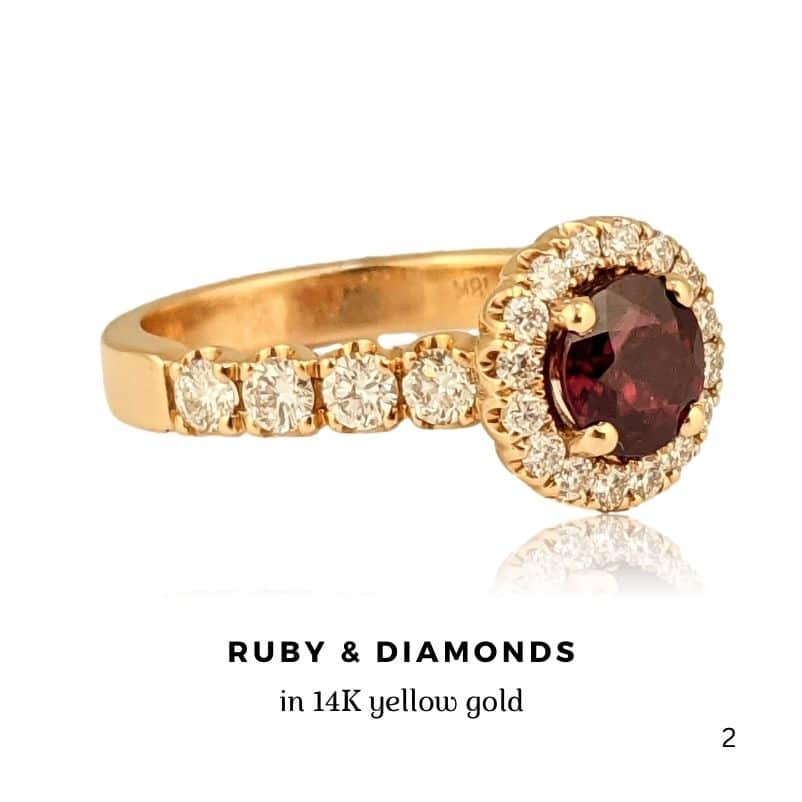
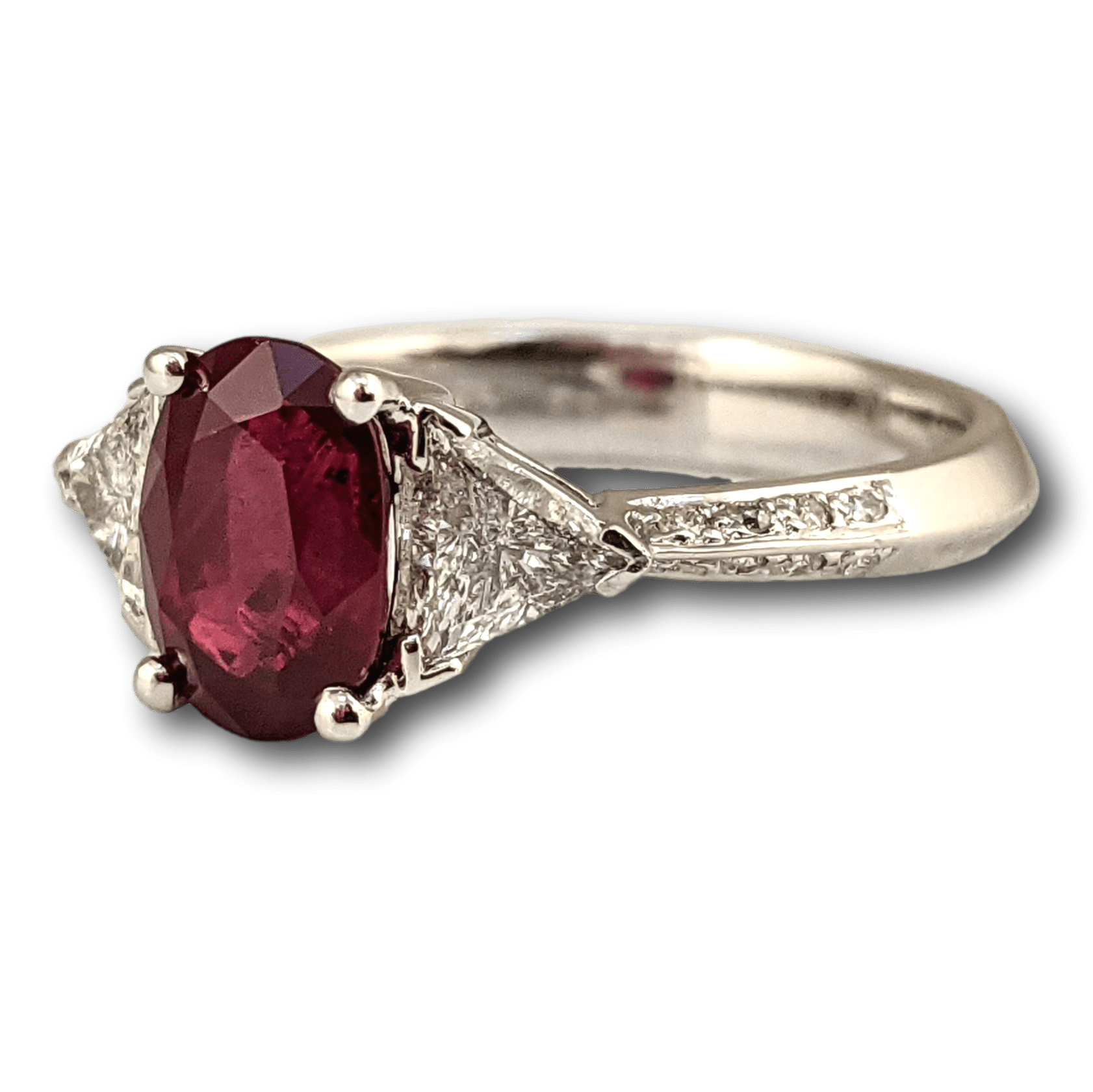
Ruby appeals to people who want a colored gemstone without sacrificing durability. It works especially well for engagement rings, anniversary bands, and statement pieces intended to last for decades.
Those considering ruby for a ring worn every day often start by exploring engagement rings and wedding jewelry built for long-term wear.
How Rubies Are Valued
Ruby pricing reflects scarcity and demand, with fine-quality stones commanding some of the highest prices among colored gemstones. In practice, value is shaped by a small set of decisive factors.
- Color: Saturation and balance matter more than size. The most valuable rubies show a vivid, well-balanced red without brown or overly dark tones. Stones with strong fluorescence often appear brighter and more energetic in natural light.
- Clarity: Most rubies contain inclusions. Eye-clean stones are rare and priced higher, but minor inclusions are expected as long as they do not dull brilliance or affect durability.
- Cut: A well-executed cut distributes color evenly and avoids dark areas. Poor cutting can mute color and reduce visual impact, even in otherwise high-quality material.
- Carat weight: Larger rubies become exponentially rarer as quality increases. Size alone does not determine value, but exceptional color in larger stones commands premium pricing.
- Treatment: Heat treatment is common and accepted when disclosed. Untreated rubies with fine color are uncommon and valued accordingly. Readers interested in how heat treatment affects ruby can learn more through GIA’s explanation of ruby and sapphire heat treatment.
Caring for Ruby Jewelry
Ruby’s hardness makes it suitable for everyday wear, but thoughtful care helps preserve its appearance and structural integrity over time.
- Cleaning: Clean ruby jewelry with warm water, mild soap, and a soft brush to remove everyday buildup.
- Ultrasonic cleaners: Often safe for many rubies, but treatment history matters. If that history is unknown, consult a jeweler before using ultrasonic cleaning.
- Avoid steam cleaning: High heat can affect treated stones and should be avoided unless confirmed safe.
- Storage: Store ruby jewelry separately from diamonds and other harder gemstones to prevent surface wear.
- Routine inspection: Settings loosen gradually from normal wear. Periodic inspections help prevent stone loss, especially for rings worn daily. Understanding how prongs wear over time and when repair is needed can help catch issues early.
Ruby Jewelry at Copeland Jewelers
Ruby offers depth, resilience, and unmistakable presence. Whether chosen for its symbolism, durability, or visual impact, it remains one of the most respected gemstones in fine jewelry.
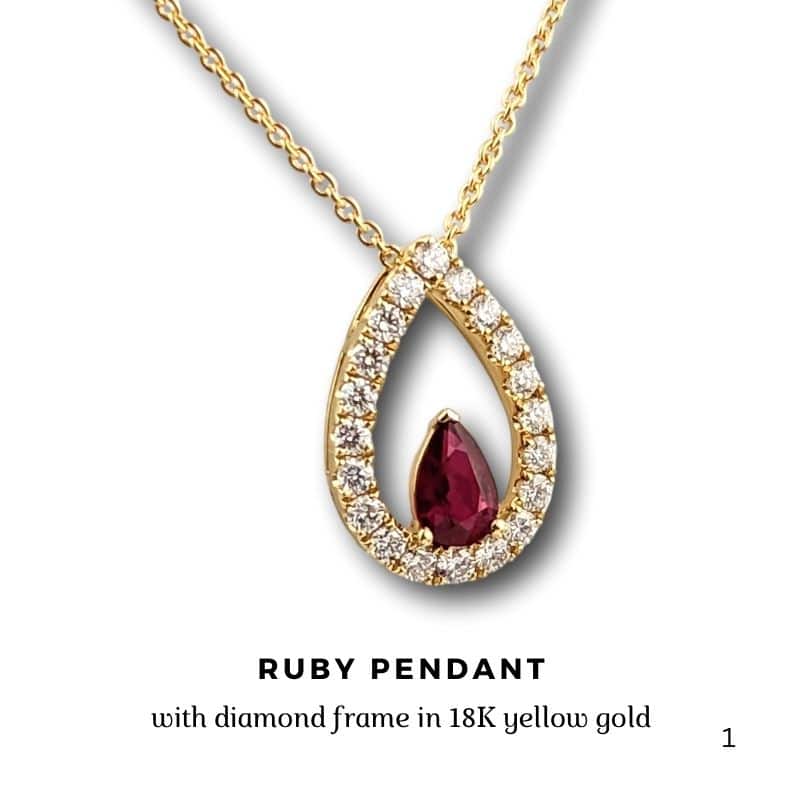
At Copeland Jewelers, clients explore ruby through custom engagement rings, anniversary pieces, and heirloom redesigns.
To see how ruby is used across different styles and settings, the custom jewelry gallery offers practical examples of craftsmanship and design choices.